
Info

Posts tagged geopolitics


It started with a text.
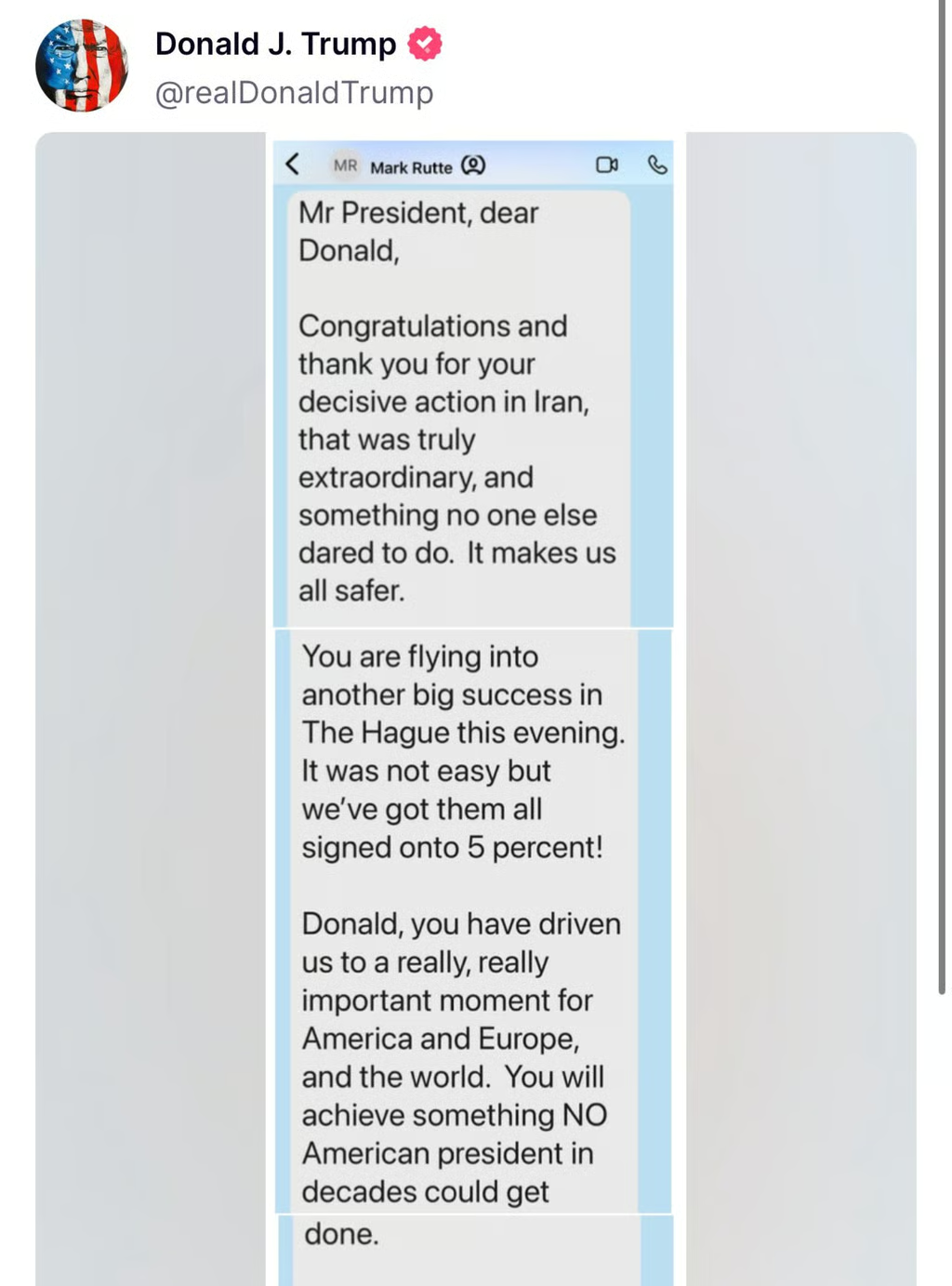

A private message between two of the most powerful men in the Western alliance system—turned into content.

Donald Trump, never one to let diplomacy get in the way of dominance, shared messages from NATO Secretary-General Mark Rutte praising his “decisive action” on Iran. There it was: flattery turned into ammunition. Trust weaponized. Screenshot diplomacy, playing out for a global audience like a reality show reveal.

The result wasn’t just spectacle. It was strategy. And it’s working.


A New Kind of Power Play

When Trump publishes a message like this, it’s not just about ego—it’s about creating a new operating system for global power.

He knows exactly what he’s doing. In one swipe, he:

  • Silences dissent by publicly aligning NATO’s chief with his military aggression.
  • Signals to European leaders: fall in line, or I’ll post the receipts.
  • Reinforces the myth that real leadership looks like speed, violence, and unilateralism.

This isn’t a glitch in the system. It is the system now.


NATO as Stage, Not Strategy

The NATO alliance was built on collective security. Quiet deals. Trust forged in sealed rooms. But that infrastructure was always vulnerable to personality. What we’re witnessing is what happens when trust is replaced by Twitter threads, and cooperation is measured in emojis.

This isn’t diplomacy—it’s branding. Trump is branding NATO under his name, and Rutte, perhaps without realizing it, just gave him the tagline.


Europe, Cornered

What’s most revealing isn’t what Trump did—but how Europe responded.

Rutte confirmed the texts. He didn’t walk them back. And in doing so, he reinforced a dynamic where power is performative, loyalty is public, and criticism becomes treasonous.

Meanwhile, Trump floated demands that NATO members spend 5% of GDP on defense—an economic impossibility for most and a political non-starter for many. But the real goal isn’t implementation. It’s domination. The number doesn’t matter. The subjugation does.


The Invisible Winners

And behind this drama? The usual suspects.
Defense contractors. Oil interests. Opportunistic strongmen. Every flare-up justifies another budget increase, another arms shipment, another “emergency” suspension of oversight.

Follow the money, and you’ll find who truly benefits from turning private messages into public threats.


The Bigger Question

So what now?

Do alliances still mean anything when they can be upended by a screenshot?
Is NATO a security pact—or just another stage for the powerful to rehearse dominance?

Trump is betting that public performance will beat private principle. That loyalty is more about what you post than what you uphold. And unless someone challenges the terms of that bet, he might be right.

Inside the Digital Illusions of the Iran–Israel War

We’re not watching a war. We’re watching a screenplay produced by empires, edited by AI, and sold as reality.

In June 2025, a now-viral image of Tel Aviv being obliterated by a swarm of missiles flooded social media. It looked real—devastating, cinematic, urgent.

But it was fake.
According to BBC Verify journalist Shayan Sardarizadeh  , the image was AI-generated. And yet, it ricocheted across the internet, amassing millions of impressions before truth had a chance to catch up.
A second video claiming to show the aftermath of Iranian strikes on Israel was traced back to footage from entirely different conflicts. It was, quite literally, yesterday’s war dressed in today’s fear.

This is the battlefield now:
Not just land. Not just air.
But perception.


How the West Writes the Script

While both sides—Iran and Israel—have weaponized visuals and emotion, the West plays a more insidious role. Its manipulation wears a tie.

In The Guardian, Nesrine Malik writes that Western leaders offer calls for “diplomacy” without ever addressing the root causes. Israel’s strikes are framed as “deterrence.” Iran’s retaliation is “aggression.” Civilian suffering is background noise.

Even so-called restraint is scripted.
Reuters reported that Britain, France, and Germany urged Iran to return to negotiations—yet all three simultaneously approved arms shipments to Israel.
Their message is not peace.
It’s obedience dressed as diplomacy. Basically, they are hypocrites

Meanwhile, editorials like this one in Time express “grave alarm” at escalating tensions. But they stop short of condemning the architects of escalation. The West has a talent for watching wars it helped create—then gasping at the fire.


Not Just States—Extremists Are Watching Too

This conflict is not unfolding in a vacuum.
ISIS, through its al-Naba publication, is framing both Iran and Israel as enemies of true Islam—using the chaos to stoke hatred, attract followers, and promise vengeance.
They don’t need to fire a shot.
They just wait for our illusions to do the work.


Truth Isn’t the First Casualty—It’s the Target

So what happens when truth is no longer collateral damage, but the goal of destruction?

– A missile hits, and we ask not where, but which version.
– A death toll rises, and we wonder: is it verified? real? current?
– Leaders speak of peace while voting for war behind closed doors.

In this fog, apathy becomes defense. Confusion becomes allegiance.
And war becomes a franchise—a story you consume with your morning scroll.


How to Reclaim Your Mind

  • Verify before you amplify: Use tools like reverse image search, metadata extractors, and independent fact-checkers like AFP and BBC Verify. Search multiple sources.
  • Ask who benefits from the narrative you’re being sold.
  • Notice omissions: If Gaza disappears from the map while Tel Aviv gets front-page coverage, ask why.
  • Resist false binaries: You can oppose both regimes and still demand truth.

We live in mad mad world

You don’t have to pick a side.
You don’t have to parrot the scripts of Tehran or Tel Aviv.
But you do have to stay awake.

Because if they steal your attention…
They’ve already won.

via

A new world order is emerging, shaped by an unseen yet critical resource: semiconductors. These tiny microprocessors power nearly every aspect of modern life, from computers and smartphones to cars, refrigerators, and even advanced military technologies. Director: Nicolas Vescovacci